⚓
YACHT SERVICES
Florida Luxury Charter & Care
Request Dispatch
• MARINE ENGINEERING • OCT 1, 2026 • 6 MIN READ

Essential Saltwater Marine Engine Maintenance Protocols for Florida Yacht Owners

Authored by Master Technician Dispatch Desk • ABYC Certified Marine Engineering
Executive Summary for Coastal Vessel Owners

Operating in South Florida’s warm, high-salinity waterways accelerates galvanic reaction and scale formation by over 300% compared to northern temperate climates. Implementing structured 100-hour flushing, raw-water impeller changes, and active sacrificial zinc monitoring is the only proven defense against catastrophic manifold failures.

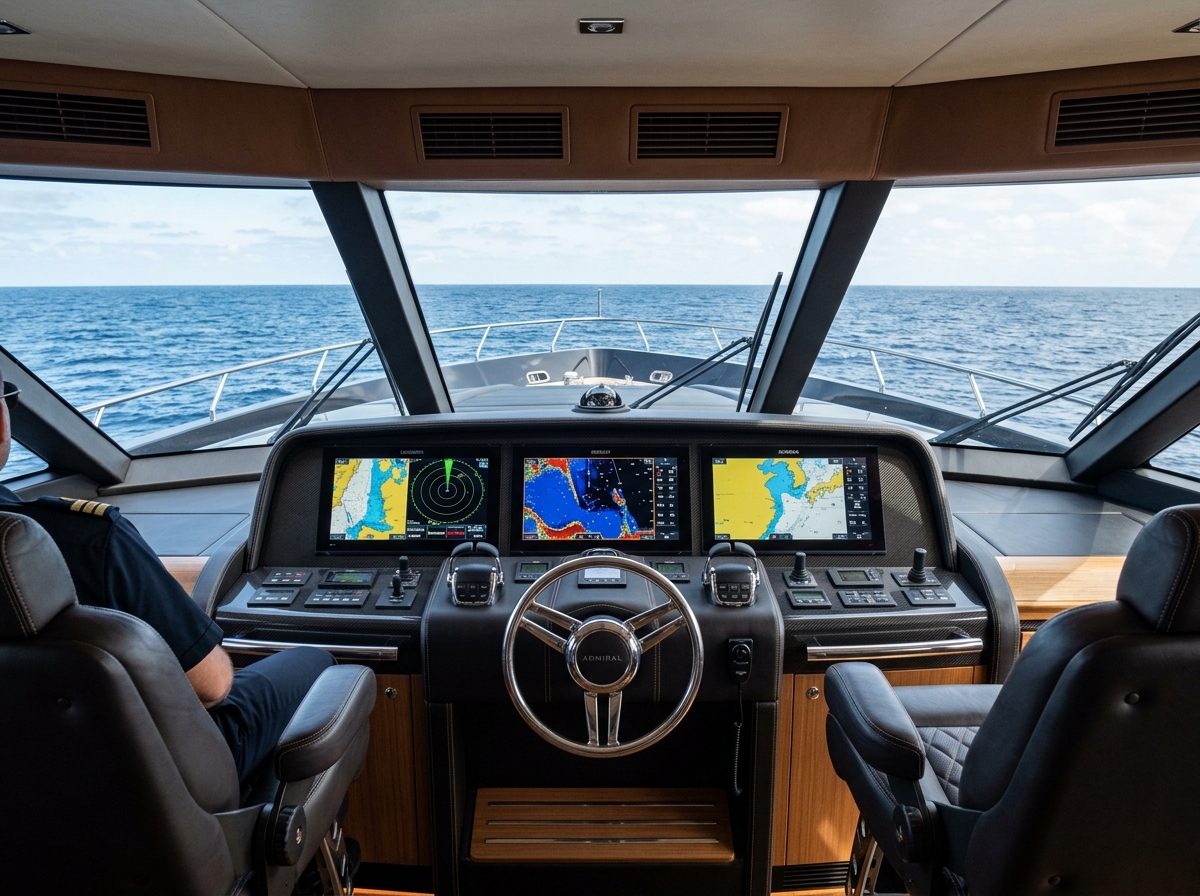
Master Marine Technician Engine Diagnostics
Dispatch: 24/7 Online Dispatch [email protected] Mon – Sat: 7AM – 7PM EST
ABYC Certified Master Technicians • $2M Insured
• MARINE ENGINEERING • OCT 1, 2026 • 6 MIN READ

Essential Saltwater Marine Engine Maintenance Protocols for Florida Yacht Owners

Authored by Master Technician Dispatch Desk • ABYC Certified Marine Engineering
Executive Summary for Coastal Vessel Owners

Operating in South Florida’s warm, high-salinity waterways accelerates galvanic reaction and scale formation by over 300% compared to northern temperate climates. Implementing structured 100-hour flushing, raw-water impeller changes, and active sacrificial zinc monitoring is the only proven defense against catastrophic manifold failures.

Master Marine Technician Engine Diagnostics
Marine Dispatch: 24/7 Online Dispatch [email protected]
ABYC Certified Master Marine Technicians
✦ MARINE ENGINEERING & VESSEL CARE

Essential Saltwater Marine Engine Maintenance Protocols for Florida Yacht Owners

October 1, 2026 • 6 min read • Master Marine Editorial Team

Operating a luxury vessel or center console in Florida coastal waters offers unmatched access to the Gulf Stream, Biscayne Bay, and the Florida Keys. However, high salinity levels combined with subtropical surface water temperatures exceeding 85 degrees Fahrenheit accelerate galvanic electrolysis, scale buildup in heat exchangers, and rapid biological fouling.

Critical Saltwater Cooling System Flushing Protocols

Every time raw seawater circulates through an inboard heat exchanger or modern high-output outboard powerhead, microscopic salt crystals deposit inside cooling passages as operating temperatures climb above 140 degrees Fahrenheit. Over time, these mineral deposits crystallize into hard scale, restricting cooling flow and causing localized hot spots on cylinder heads.

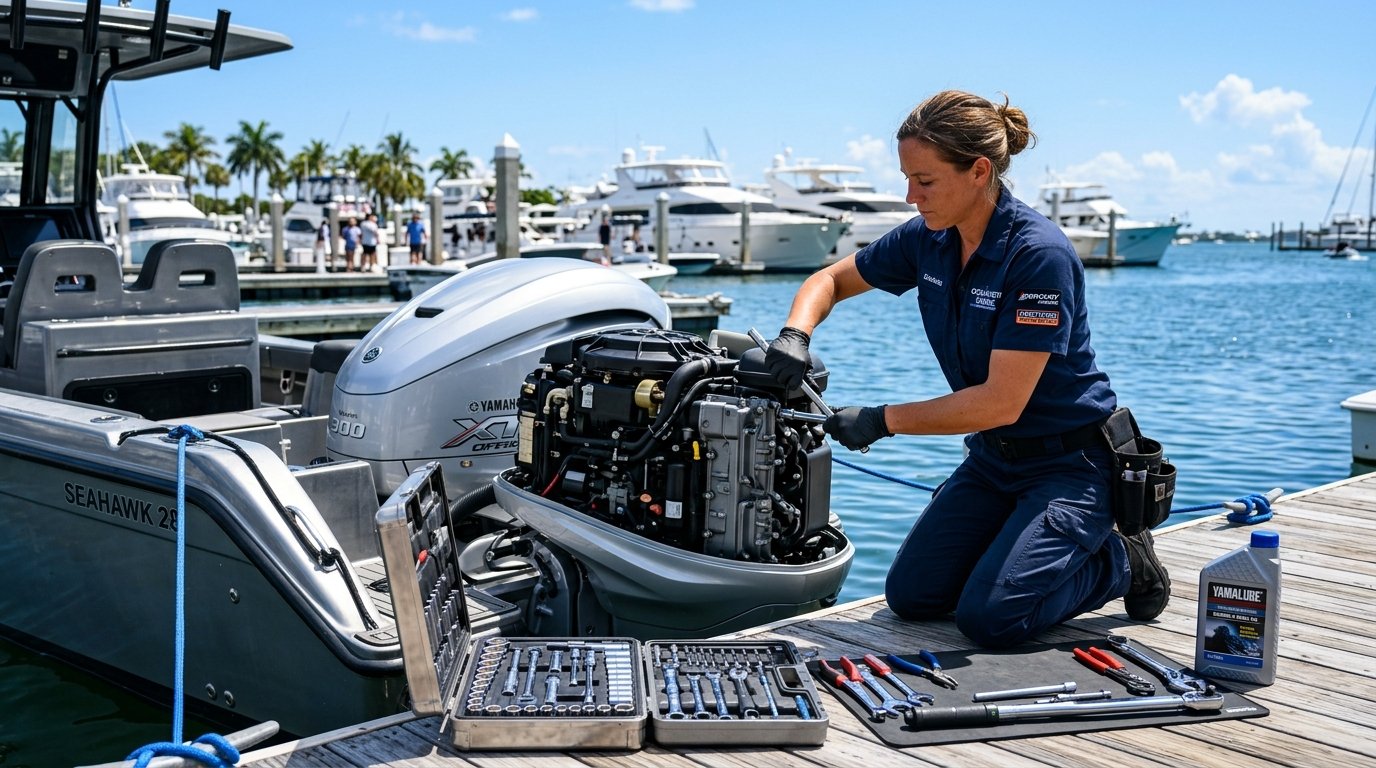
To preserve manufacturer warranty coverage and prevent catastrophic powerhead failure, engine blocks must be thoroughly flushed with fresh water using OEM flushing ports or dual-feed motor muffs immediately upon docking. Incorporating a dedicated salt-neutralizing descaling solution every 50 hours breaks down encrusted mineral deposits before they impede thermostat and pressure relief valve movement.

Sacrificial Anode Inspection and Electrolysis Prevention

The aggressive ionic conductivity of warm saltwater creates an ideal medium for galvanic corrosion whenever dissimilar submerged metals come into contact. Modern marine drive units depend entirely on sacrificial anodes (zinc, aluminum, or magnesium alloys) to protect costly stainless steel propeller shafts, bronze rudders, and cast aluminum lower units.

  • Alloy Selection: While traditional zinc anodes remain common, specialized aluminum-indium alloys deliver superior cathodic protection in both brackish intercoastal waterways and open ocean saltwater.
  • Replacement Threshold: Never allow anodes to degrade beyond 50 percent of their original mass. Once an anode reaches half its initial volume, its surface conductivity drops sharply, shifting corrosive electrical currents onto adjacent drive castings.
  • Electrical Bonding Continuity: Periodically measure resistance across the vessel’s internal bonding system with a digital multimeter. Resistance between internal grounding plates and underwater thru-hulls should register under 1 ohm.

Fuel System Preservation Against Ethanol Phase Separation

Modern E10 marine fuels attract atmospheric moisture rapidly in Florida’s humid climate. When water concentration inside the fuel tank exceeds 0.5 percent by volume, the ethanol chemically binds with water molecules and drops out of suspension to the bottom of the tank, a phenomenon known as phase separation. The resulting water-ethanol layer is highly acidic and completely non-combustible.

Vessel owners must install 10-micron water-separating fuel filters equipped with clear collection bowls and replace elements at each 100-hour service interval. Maintaining high-grade marine fuel stabilizers and keeping tanks filled during periods of non-use minimizes air headspace and halts internal moisture condensation.

Yacht Services Marine Technical Bureau

Authored by certified ABYC master technicians providing dockside mobile mechanical service, diesel maintenance, and yacht management across Florida.

Need Certified Marine Mechanics at Your Slip?

Our mobile fleet services Miami, Fort Lauderdale, and Tampa Bay slips with factory diagnostic tools and zero-discharge fluid exchange.

Book Dockside Service Inspection →

Need Certified Marine Mechanics at Your Slip?

Our mobile fleet services Miami, Fort Lauderdale, and Tampa Bay slips with factory diagnostic tools and zero-discharge fluid exchange.

Book Dockside Service Inspection →

Need Certified Marine Mechanics at Your Slip?

Our mobile fleet services Miami, Fort Lauderdale, and Tampa Bay slips with factory diagnostic tools and zero-discharge fluid exchange.

Book Dockside Service Inspection →

Need Certified Marine Mechanics at Your Slip?

Our mobile fleet services Miami, Fort Lauderdale, and Tampa Bay slips with factory diagnostic tools and zero-discharge fluid exchange.

Book Dockside Service Inspection →

Need Certified Marine Mechanics at Your Slip?

Our mobile fleet services Miami, Fort Lauderdale, and Tampa Bay slips with factory diagnostic tools and zero-discharge fluid exchange.

Book Dockside Service Inspection →
Scroll to Top